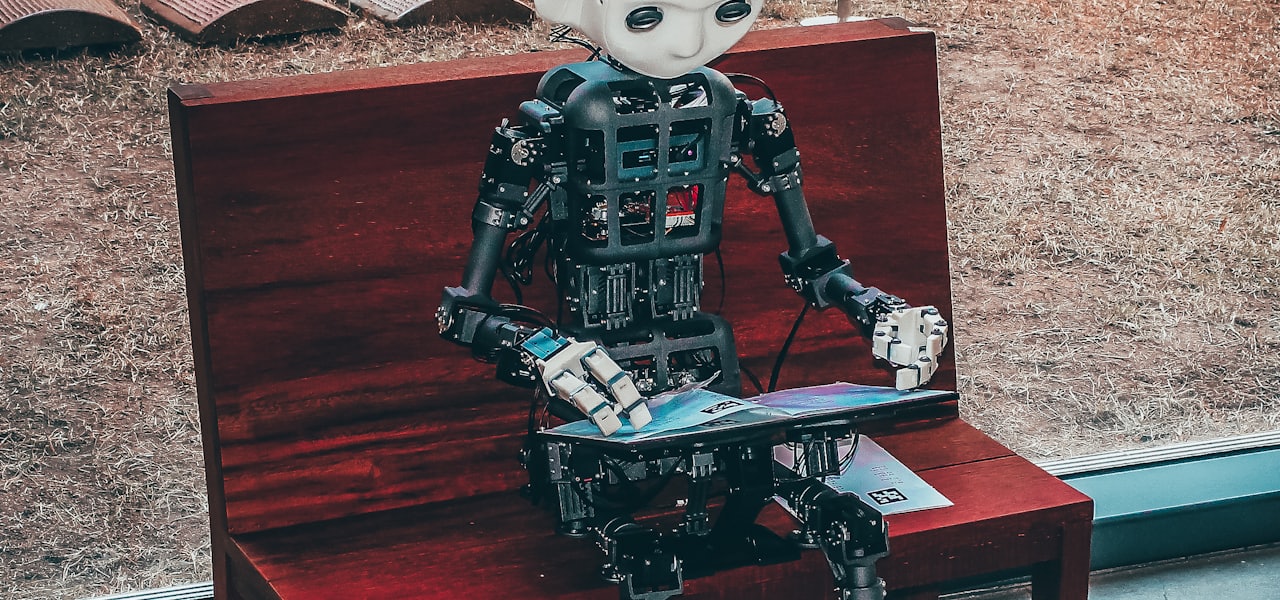
Shopping for the best AI sales assistant? An AI sales assistant is software that uses machine learning to help you get more done — it keeps getting smarter as the underlying models improve. Pricing, accuracy, and the size of the model behind the tool are the three factors that most affect daily usefulness. Whether you are a beginner or a pro, the right AI sales assistant slots into your workflow and pays for itself fast. We tested the leading options and ranked them by quality, value, and ease of use.
Film recorder
A film recorder is a graphical output device for transferring images to photographic film from a digital source. In a typical film recorder, an image is passed from a host computer to a mechanism to expose film through a variety of methods, historically by direct photography of a high-resolution cathode-ray tube (CRT) display. The exposed film can then be developed using conventional developing techniques, and displayed with a slide or motion picture projector. The use of film recorders predates the current use of digital projectors, which eliminate the time and cost involved in the intermediate step of transferring computer images to film stock, instead directly displaying the image signal from a computer. Motion picture film scanners are the opposite of film recorders, copying content from film stock to a computer system. Film recorders can be thought of as modern versions of kinescopes. == Design == === Operation === All film recorders typically work in the same manner. The image is fed from a host computer as a raster stream over a digital interface. A film recorder exposes film through various mechanisms; flying spot (early recorders); photographing a high resolution video monitor; electron beam recorder (Sony HDVS); a CRT scanning dot (Celco); focused beam of light from a light valve technology (LVT) recorder; a scanning laser beam (Arrilaser); or recently, full-frame LCD array chips. For color image recording on a CRT film recorder, the red, green, and blue channels are sequentially displayed on a single gray scale CRT, and exposed to the same piece of film as a multiple exposure through a filter of the appropriate color. This approach yields better resolution and color quality than possible with a tri-phosphor color CRT. The three filters are usually mounted on a motor-driven wheel. The filter wheel, as well as the camera's shutter, aperture, and film motion mechanism are usually controlled by the recorder's electronics and/or the driving software. CRT film recorders are further divided into analog and digital types. The analog film recorder uses the native video signal from the computer, while the digital type uses a separate display board in the computer to produce a digital signal for a display in the recorder. Digital CRT recorders provide a higher resolution at a higher cost compared to analog recorders due to the additional specialized hardware. Typical resolutions for digital recorders were quoted as 2K and 4K, referring to 2048×1366 and 4096×2732 pixels, respectively, while analog recorders provided a resolution of 640×428 pixels in comparison. Higher-quality LVT film recorders use a focused beam of light to write the image directly onto a film loaded spinning drum, one pixel at a time. In one example, the light valve was a liquid-crystal shutter, the light beam was steered with a lens, and text was printed using a pre-cut optical mask. The LVT will record pixel beyond grain. Some machines can burn 120-res or 120 lines per millimeter. The LVT is basically a reverse drum scanner. The exposed film is developed and printed by regular photographic chemical processing. === Formats === Film recorders are available for a variety of film types and formats. The 35 mm negative film and transparencies are popular because they can be processed by any photo shop. Single-image 4×5 film and 8×10 are often used for high-quality, large format printing. Some models have detachable film holders to handle multiple formats with the same camera or with Polaroid backs to provide on-site review of output before exposing film. == Uses == Film recorders are used in digital printing to generate master negatives for offset and other bulk printing processes. For preview, archiving, and small-volume reproduction, film recorders have been rendered obsolete by modern printers that produce photographic-quality hardcopies directly on plain paper. They are also used to produce the master copies of movies that use computer animation or other special effects based on digital image processing. However, most cinemas nowadays use Digital Cinema Packages on hard drives instead of film stock. === Computer graphics === Film recorders were among the earliest computer graphics output devices; for example, the IBM 740 CRT Recorder was announced in 1954. Film recorders were also commonly used to produce slides for slide projectors; but this need is now largely met by video projectors that project images directly from a computer to a screen. The terms "slide" and "slide deck" are still commonly used in presentation programs. === Current uses === Currently, film recorders are primarily used in the motion picture film-out process for the ever increasing amount of digital intermediate work being done. Although significant advances in large venue video projection alleviates the need to output to film, there remains a deadlock between the motion picture studios and theater owners over who should pay for the cost of these very costly projection systems. This, combined with the increase in international and independent film production, will keep the demand for film recording steady for at least a decade. == Key manufacturers == Traditional film recorder manufacturers have all but vanished from the scene or have evolved their product lines to cater to the motion picture industry. Dicomed was one such early provider of digital color film recorders. Polaroid, Management Graphics, Inc, MacDonald-Detwiler, Information International, Inc., and Agfa were other producers of film recorders. Arri is the only current major manufacturer of film recorders. Kodak Lightning I film recorder. One of the first laser recorders. Needed an engineering staff to set up. Kodak Lightning II film recorder used both gas and diode laser to record on to film. The last LVT machines produced by Kodak / Durst-Dice stopped production in 2002. There are no LVT film recorders currently being produced. LVT Saturn 1010 uses a LED exposure (RGB) to 8"x10" film at 1000-3000ppi. LUX Laser Cinema Recorder from Autologic/Information International in Thousand Oaks, California. Sales end in March 2000. Used on the 1997 film “Titanic”. Arri produces the Arrilaser line of laser-based motion picture film recorders. MGI produced the Solitaire line of CRT-based motion picture film recorders. Matrix, originally ImaPRO, a branch of Agfa Division, produced the QCR line of CRT-based motion picture film recorders. CCG, formerly Agfa film recorders, has been a steady manufacturer of film recorders based in Germany. In 2004 CCG introduced Definity, a motion picture film recorder utilizing LCD technology. In 2010 CCG introduced the first full LED LCD film recorder as a new step in film recording. Cinevator was made by Cinevation AS, in Drammen, Norway. The Cinevator was a real-time digital film recorder. It could record IN, IP and prints with and without sound Oxberry produced the Model 3100 film recorder camera system, with interchangeable pin-registered movements (shuttles) for 35 mm (full frame/Silent, 1.33:1) and 16 mm (regular 16, "2R"), and others have adapted the Oxberry movements for CinemaScope, 1.85:1, 1.75:1, 1.66:1, as well as Academy/Sound (1.37:1) in 35 mm and Super-16 in 16 mm ("1R"). For instance, the "Solitaire" and numerous others employed the Oxberry 3100 camera system. == History == Before video tape recorders or VTRs were invented, TV shows were either broadcast live or recorded to film for later showing, using the kinescope process. In 1967, CBS Laboratories introduced the Electronic Video Recording format, which used video and telecined-to-video film sources, which were then recorded with an electron-beam recorder at CBS' EVR mastering plant at the time to 35mm film stock in a rank of 4 strips on the film, which was then slit down to 4 8.75 mm (0.344 in) film copies, for playback in an EVR player. All types of CRT recorders were (and still are) used for film recording. Some early examples used for computer-output recording were the 1954 IBM 740 CRT Recorder, and the 1962 Stromberg-Carlson SC-4020, the latter using a Charactron CRT for text and vector graphic output to either 16 mm motion picture film, 16 mm microfilm, or hard-copy paper output. Later 1970 and 80s-era recording to B&W (and color, with 3 separate exposures for red, green, and blue)) 16 mm film was done with an EBR (Electron Beam Recorder), the most prominent examples made by 3M), for both video and COM (Computer Output Microfilm) applications. Image Transform in Universal City, California used specially modified 3M EBR film recorders that could perform color film-out recording on 16 mm by exposing three 16 mm frames in a row (one red, one green and one blue). The film was then printed to color 16 mm or 35 mm film. The video fed to the recorder could either be NTSC, PAL or SECAM. Later, Image Transform used specially modified VTRs to record 24 frame for their "Image Vision" system. The modified 1 inch type B videotape VTRs would record
Halbert White
Halbert Lynn White Jr. (November 19, 1950 – March 31, 2012) was the Chancellor's Associates Distinguished Professor of Economics at the University of California, San Diego, and a Fellow of the Econometric Society and the American Academy of Arts and Sciences. == Education and career == White, a native of Kansas City, Missouri, graduated salutatorian from Southwest High School in 1968. He went on to study at Princeton University, receiving his B.A. in economics in 1972. He earned his Ph.D. in economics at the Massachusetts Institute of Technology in 1976, under the supervision of Jerry A. Hausman and Robert Solow. White spent his first years as an assistant professor in the University of Rochester before moving to University of California, San Diego (UCSD) in 1979. He remained at UCSD until his untimely death from cancer. == Research == White was well known in the field of econometrics for his 1980 paper on robust standard errors (which is among the most-cited paper in economics since 1970), and for the heteroscedasticity-consistent estimator and the test for heteroskedasticity that are named after him. A 1982 paper by White contributed strongly to the development of quasi-maximum likelihood estimation. He also contributed to numerous other areas such as neural networks and medicine. In 1999, White co-founded an economic consulting firm, Bates White, which is based in Washington, D.C.
Top 10 AI Analytics Tools Compared (2026)
Shopping for the best AI analytics tool? An AI analytics tool is software that uses machine learning to help you get more done — it keeps getting smarter as the underlying models improve. Pricing, accuracy, and the size of the model behind the tool are the three factors that most affect daily usefulness. Whether you are a beginner or a pro, the right AI analytics tool slots into your workflow and pays for itself fast. Below we compare features, pricing, and real output so you can choose with confidence.
Synchronous context-free grammar
Synchronous context-free grammars (SynCFG or SCFG; not to be confused with stochastic CFGs) are a type of formal grammar designed for use in transfer-based machine translation. Rules in these grammars apply to two languages at the same time, capturing grammatical structures that are each other's translations. The theory of SynCFGs borrows from syntax-directed transduction and syntax-based machine translation, modeling the reordering of clauses that occurs when translating a sentence by correspondences between phrase-structure rules in the source and target languages. Performance of SCFG-based MT systems has been found comparable with, or even better than, state-of-the-art phrase-based machine translation systems. Several algorithms exist to perform translation using SynCFGs. == Formalism == Rules in a SynCFG are superficially similar to CFG rules, except that they specify the structure of two phrases at the same time; one in the source language (the language being translated) and one in the target language. Numeric indices indicate correspondences between non-terminals in both constituent trees. Chiang gives the Chinese/English example: X → (yu X1 you X2, have X2 with X1) This rule indicates that an X phrase can be formed in Chinese with the structure "yu X1 you X2", where X1 and X2 are variables standing in for subphrases; and that the corresponding structure in English is "have X2 with X1" where X1 and X2 are independently translated to English. == Software == cdec, MT decoding package that supports SynCFGs Joshua, a machine translation decoding system written in Java
Vicarious (company)
Vicarious was an artificial intelligence company based in the San Francisco Bay Area, California. They use the theorized computational principles of the brain to attempt to build software that can think and learn like a human. Vicarious describes its technology as "a turnkey robotics solution integrator using artificial intelligence to automate tasks too complex and versatile for traditional automations". Alphabet Inc acquired the company in 2022 for an undisclosed amount. == Founders == The company was founded in 2010 by D. Scott Phoenix and Dileep George. Before co-founding Vicarious, Phoenix was Entrepreneur in Residence at Founders Fund and CEO of Frogmetrics, a touchscreen analytics company he co-founded through the Y Combinator incubator program. Previously, George was Chief Technology Officer at Numenta, a company he co-founded with Jeff Hawkins and Donna Dubinsky while completing his PhD at Stanford University. == Funding == The company launched in February 2011 with funding from Founders Fund, Dustin Moskovitz, Adam D’Angelo (former Facebook CTO and co-founder of Quora), Felicis Ventures, and Palantir co-founder Joe Lonsdale. In August 2012, in its Series A round of funding, it raised an additional $15 million. The round was led by Good Ventures; Founders Fund, Open Field Capital and Zarco Investment Group also participated. The company received $40 million in its Series B round of funding. The round was led by individuals including Mark Zuckerberg, Elon Musk, and others. An additional undisclosed amount was later contributed by Amazon.com CEO Jeff Bezos, Yahoo! co-founder Jerry Yang, Skype co-founder Janus Friis and Salesforce.com CEO Marc Benioff. == Recursive Cortical Network == Vicarious is developing machine learning software based on the computational principles of the human brain. One such software is a vision system known as the Recursive Cortical Network (RCN), it is a generative graphical visual perception system that interprets the contents of photographs and videos in a manner similar to humans. The system is powered by a balanced approach that takes sensory data, mathematics, and biological plausibility into consideration. On October 22, 2013, beating CAPTCHA, Vicarious announced its model was reliably able to solve modern CAPTCHAs, with character recognition rates of 90% or better when trained on one style. However, Luis von Ahn, a pioneer of early CAPTCHA and founder of reCAPTCHA, expressed skepticism, stating: "It's hard for me to be impressed since I see these every few months." He pointed out that 50 similar claims to that of Vicarious had been made since 2003. Vicarious later published their findings in peer-reviewed journal Science. Vicarious has indicated that its AI was not specifically designed to complete CAPTCHAs and its success at the task is a product of its advanced vision system. Because Vicarious's algorithms are based on insights from the human brain, it is also able to recognize photographs, videos, and other visual data.
F-score
In statistical analysis of binary classification and information retrieval systems, the F-score or F-measure is a measure of predictive performance. It is calculated from the precision and recall of the test, where the precision is the number of true positive results divided by the number of all samples predicted to be positive, including those not identified correctly, and the recall is the number of true positive results divided by the number of all samples that should have been identified as positive. Precision is also known as positive predictive value, and recall is also known as sensitivity in diagnostic binary classification. The F1 score is the harmonic mean of the precision and recall. It thus symmetrically represents both precision and recall in one metric. The more generic F β {\displaystyle F_{\beta }} score applies additional weights, valuing one of precision or recall more than the other. The highest possible value of an F-score is 1.0, indicating perfect precision and recall, and the lowest possible value is 0, if the precision or the recall is zero. == Etymology == The name F-measure is believed to be named after a different F function in Van Rijsbergen's book, when introduced to the Fourth Message Understanding Conference (MUC-4, 1992). == Definition == The traditional F-measure or balanced F-score (F1 score) is the harmonic mean of precision and recall: F 1 = 2 r e c a l l − 1 + p r e c i s i o n − 1 = 2 p r e c i s i o n ⋅ r e c a l l p r e c i s i o n + r e c a l l = 2 T P 2 T P + F P + F N {\displaystyle F_{1}={\frac {2}{\mathrm {recall} ^{-1}+\mathrm {precision} ^{-1}}}=2{\frac {\mathrm {precision} \cdot \mathrm {recall} }{\mathrm {precision} +\mathrm {recall} }}={\frac {2\mathrm {TP} }{2\mathrm {TP} +\mathrm {FP} +\mathrm {FN} }}} With precision = TP / (TP + FP) and recall = TP / (TP + FN), it follows that the numerator of F1 is the sum of their numerators and the denominator of F1 is the sum of their denominators. If FP=FN F 1 = 2 T P 2 T P + 2 F P = T P T P + F P {\displaystyle F_{1}={\frac {2\mathrm {TP} }{2\mathrm {TP} +2\mathrm {FP} }}={\frac {\mathrm {TP} }{\mathrm {TP} +\mathrm {FP} }}} or F 1 = 2 T P 2 T P + 2 F N = T P T P + F N {\displaystyle F_{1}={\frac {2\mathrm {TP} }{2\mathrm {TP} +2\mathrm {FN} }}={\frac {\mathrm {TP} }{\mathrm {TP} +\mathrm {FN} }}} So, F1 = precision = recall If TP=FP=FN F 1 = 2 T P 2 T P + 2 F P = 2 T P 4 T P = 1 2 = 0.5 {\displaystyle F_{1}={\frac {2\mathrm {TP} }{2\mathrm {TP} +2\mathrm {FP} }}={\frac {2\mathrm {TP} }{4\mathrm {TP} }}={\frac {1}{2}}=0.5} or F 1 = 2 T P 2 T P + 2 F N = 2 T P 4 T P = 1 2 = 0.5 {\displaystyle F_{1}={\frac {2\mathrm {TP} }{2\mathrm {TP} +2\mathrm {FN} }}={\frac {2\mathrm {TP} }{4\mathrm {TP} }}={\frac {1}{2}}=0.5} To see it as a harmonic mean, note that F 1 − 1 = 1 2 ( r e c a l l − 1 + p r e c i s i o n − 1 ) {\displaystyle F_{1}^{-1}={\frac {1}{2}}(\mathrm {recall} ^{-1}+\mathrm {precision} ^{-1})} . === Fβ score === A more general F score, F β {\displaystyle F_{\beta }} , that uses a positive real factor β {\displaystyle \beta } , where β {\displaystyle \beta } is chosen such that recall is considered β {\displaystyle \beta } times as important as precision, is: F β = β 2 + 1 ( β 2 ⋅ r e c a l l − 1 ) + p r e c i s i o n − 1 = ( 1 + β 2 ) ⋅ p r e c i s i o n ⋅ r e c a l l ( β 2 ⋅ p r e c i s i o n ) + r e c a l l {\displaystyle F_{\beta }={\frac {\beta ^{2}+1}{(\beta ^{2}\cdot \mathrm {recall} ^{-1})+\mathrm {precision} ^{-1}}}={\frac {(1+\beta ^{2})\cdot \mathrm {precision} \cdot \mathrm {recall} }{(\beta ^{2}\cdot \mathrm {precision} )+\mathrm {recall} }}} To see that as a weighted harmonic mean, note that F β − 1 = 1 β + β − 1 ( β ⋅ r e c a l l − 1 + β − 1 ⋅ p r e c i s i o n − 1 ) {\displaystyle F_{\beta }^{-1}={\frac {1}{\beta +\beta ^{-1}}}(\beta \cdot \mathrm {recall} ^{-1}+\beta ^{-1}\cdot \mathrm {precision} ^{-1})} . In terms of Type I and type II errors this becomes: F β = ( 1 + β 2 ) ⋅ T P ( 1 + β 2 ) ⋅ T P + β 2 ⋅ F N + F P = ( 1 + β 2 ) ⋅ T P ( T P + F N ) ⋅ β 2 + ( T P + F P ) {\displaystyle F_{\beta }={\frac {(1+\beta ^{2})\cdot \mathrm {TP} }{(1+\beta ^{2})\cdot \mathrm {TP} +\beta ^{2}\cdot \mathrm {FN} +\mathrm {FP} }}\,={\frac {(1+\beta ^{2})\cdot \mathrm {TP} }{(\mathrm {TP} +\mathrm {FN} )\cdot \beta ^{2}+(\mathrm {TP} +\mathrm {FP} )}}\,} Two commonly used values for β {\displaystyle \beta } are 2, which weighs recall higher than precision, and 1/2, which weighs recall lower than precision. The F-measure was derived so that F β {\displaystyle F_{\beta }} "measures the effectiveness of retrieval with respect to a user who attaches β {\displaystyle \beta } times as much importance to recall as precision". It is based on Van Rijsbergen's effectiveness measure E = 1 − ( α p + 1 − α r ) − 1 {\displaystyle E=1-\left({\frac {\alpha }{p}}+{\frac {1-\alpha }{r}}\right)^{-1}} Their relationship is: F β = 1 − E {\displaystyle F_{\beta }=1-E} where α = 1 1 + β 2 {\displaystyle \alpha ={\frac {1}{1+\beta ^{2}}}} == Diagnostic testing == This is related to the field of binary classification where recall is often termed "sensitivity". == Dependence of the F-score on class imbalance == Precision-recall curve, and thus the F β {\displaystyle F_{\beta }} score, explicitly depends on the ratio r {\displaystyle r} of positive to negative test cases. This means that comparison of the F-score across different problems with differing class ratios is problematic. One way to address this issue (see e.g., Siblini et al., 2020) is to use a standard class ratio r 0 {\displaystyle r_{0}} when making such comparisons. == Applications == The F-score is often used in the field of information retrieval for measuring search, document classification, and query classification performance. It is particularly relevant in applications which are primarily concerned with the positive class and where the positive class is rare relative to the negative class. Earlier works focused primarily on the F1 score, but with the proliferation of large scale search engines, performance goals changed to place more emphasis on either precision or recall and so F β {\displaystyle F_{\beta }} is seen in wide application. The F-score is also used in machine learning. However, the F-measures do not take true negatives into account, hence measures such as the Matthews correlation coefficient, Informedness or Cohen's kappa may be preferred to assess the performance of a binary classifier. The F-score has been widely used in the natural language processing literature, such as in the evaluation of named entity recognition and word segmentation. == Properties == The F1 score is the Dice coefficient of the set of retrieved items and the set of relevant items. The F1-score of a classifier which always predicts the positive class converges to 1 as the probability of the positive class increases. The F1-score of a classifier which always predicts the positive class is equal to 2 proportion_of_positive_class / ( 1 + proportion_of_positive_class ), since the recall is 1, and the precision is equal to the proportion of the positive class. If the scoring model is uninformative (cannot distinguish between the positive and negative class) then the optimal threshold is 0 so that the positive class is always predicted. F1 score is concave in the true positive rate. == Criticism == David Hand and others criticize the widespread use of the F1 score since it gives equal importance to precision and recall. In practice, different types of mis-classifications incur different costs. In other words, the relative importance of precision and recall is an aspect of the problem. According to Davide Chicco and Giuseppe Jurman, the F1 score is less truthful and informative than the Matthews correlation coefficient (MCC) in binary evaluation classification. David M W Powers has pointed out that F1 ignores the True Negatives and thus is misleading for unbalanced classes, while kappa and correlation measures are symmetric and assess both directions of predictability - the classifier predicting the true class and the true class predicting the classifier prediction, proposing separate multiclass measures Informedness and Markedness for the two directions, noting that their geometric mean is correlation. Another source of critique of F1 is its lack of symmetry. It means it may change its value when dataset labeling is changed - the "positive" samples are named "negative" and vice versa. This criticism is met by the P4 metric definition, which is sometimes indicated as a symmetrical extension of F1. Finally, Ferrer and Dyrland et al. argue that the expected cost (or its counterpart, the expected utility) is the only principled metric for evaluation of classification decisions, having various advantages over the F-score and the MCC. Both works show that the F-score can result in wrong conclusions about the absolute and relative quality of systems. == Difference from Fowlkes–Mallows index == While the F-measur